A practical comparison of agave and sugarcane fibre straws for Australian hospitality venues.
Agave and sugarcane straws are both plant-fibre alternatives to plastic, but they are not the same product. For Australian venues, sugarcane fibre straws are usually easier to source in commercial pack sizes, with clearer local availability and compostability information. Agave straws may suit some buyers, but check the material blend, certification, supply continuity and freight before committing behind the counter.
What are agave fibre straws?
Agave fibre straws are generally made using fibre left from agave processing. The idea is similar to other agricultural by-product materials: take a fibrous leftover and turn it into a single-use service item instead of using conventional plastic.
The detail matters. Some agave straws on the market may be blended with other binders or polymers, and not every product sold as plant-based is compostable in the same way. A venue should ask for the exact material composition, any lining or coating, and the certification documents before treating agave straws as a like-for-like replacement.
Availability is also part of the decision. If a straw is difficult to source consistently in Australia, it can create more work than it saves. Hospitality buyers need a carton they can reorder before a busy week, not a product that is only available through an overseas distributor or a small seasonal shipment.
What are sugarcane fibre straws?
Sugarcane straws are made from bagasse, the fibre left after sugarcane is processed. EcoGreen Supplies sugarcane straws are 100% sugarcane fibre, plastic-free, PFAS-free and made without a lining.
They are certified commercially compostable and break down in about 90 days in a commercial composting facility. They are not certified home compostable. That distinction matters because a venue’s waste pathway is part of whether compostable packaging is actually dealt with properly after service.
In use, sugarcane fibre straws are designed to hold up for 4+ hours in hot and cold drinks without going soggy. That makes them a practical option for iced coffee, cocktails, juices, soft drinks, smoothies and bubble tea when the right diameter is chosen.
EcoGreen Supplies ships sugarcane straws Australia-wide from NSW through the One World Courier network. Freight is quoted live at checkout from the carrier’s real rates and charged at cost, with no markup. Free warehouse pickup is also available.
The main differences for Australian venues
The biggest practical difference is not the crop. It is how clearly the straw can be specified, reordered and handled in your waste stream. A venue should know what the straw is made from, whether it has a lining, whether it is certified commercially compostable, and what carton sizes are available before it changes over.
Sugarcane fibre straws have a straightforward material story: 100% bagasse, no plastic, no PFAS and no lining. That is easier for staff to explain if a customer asks why the venue changed from paper or plastic. It is also easier for a buyer to assess than a product described only as plant-based.
Agave straws may be a suitable option where a supplier can provide clear documentation and reliable local stock. The risk is assuming that agave fibre automatically means compostable, plastic-free or locally available. Those claims need to be checked product by product.
For many Australian hospitality operators, the reorder process is just as important as the material. A straw that works in a sample pack is not enough if the venue cannot get the same item in bulk when trade picks up. Consistent carton supply is a business requirement, not a nice extra.
Which straw sizes suit which drinks?
The right straw depends on the drink, not just the material. A narrow straw that works in a spirit and mixer may frustrate customers drinking thick smoothies. A bubble tea straw is excessive for a short cocktail and takes up more storage space than needed.
EcoGreen Supplies stocks five sugarcane straw options for commercial venues:
- Regular Sugarcane Straws - 6mm x 200mm - 2,500 pcs $70.00, 5,000 pcs $135.00
- Cocktail Sugarcane Straws - 6mm x 140mm - 2,500 pcs $55.00, 5,000 pcs $110.00
- Jumbo Sugarcane Straws - 8mm x 200mm - 2,500 pcs $100.00, 5,000 pcs $195.00
- Individually Wrapped Bubble Tea Straws - 12mm x 220mm - 1,800 pcs $165.00
- Bubble Tea Straws (unwrapped) - 12mm x 220mm - 1,800 pcs $160.00
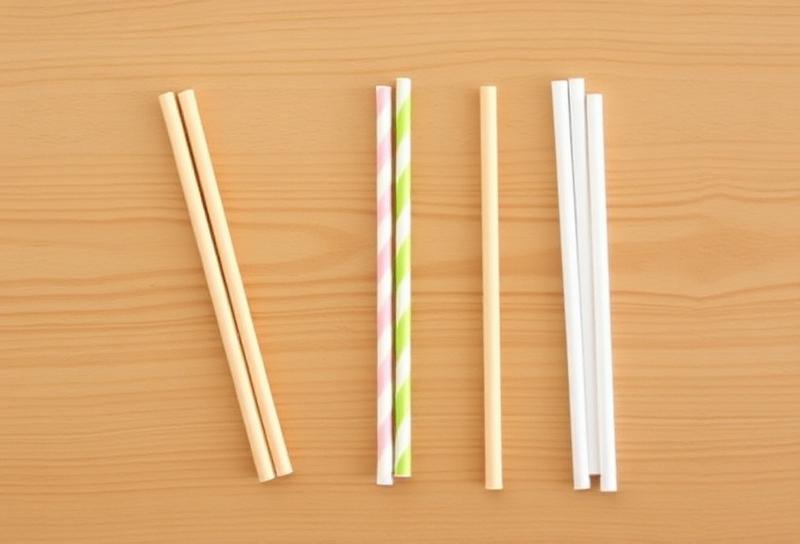
Regular 6mm straws suit most standard cold drinks, iced coffees and soft drinks. Cocktail 6mm straws are shorter, so they are better suited to short glasses, bar service and garnish-heavy drinks where a full-length straw looks out of place. Jumbo 8mm straws are a better choice when the drink is thicker or served with ice and fruit pieces.
Bubble tea needs a 12mm straw because pearls and jellies need room to pass through. Venues can choose wrapped or unwrapped depending on their service model, hygiene preference and storage setup. You can compare the bubble tea straw options or view individually wrapped bubble tea straws if staff hand straws directly to customers.
Compostability is not the same as disappearing anywhere
Commercial compostability means the product is designed to break down under the controlled conditions of a commercial composting facility. EcoGreen Supplies sugarcane fibre straws are certified commercially compostable and break down in about 90 days in that setting.
This does not mean the straws are certified home compostable. It also does not mean they should be treated as marine biodegradable or assumed to break down within a set time in landfill. Those are different environments, and making claims across them would be misleading.
For a venue, the most honest way to use compostable straws is to match the claim with the waste system. If your waste contractor can process commercially compostable packaging, staff should know where used straws go. If your venue does not have that pathway, the material choice can still reduce plastic at point of use, but the end-of-life benefit is more limited.
This is where sugarcane fibre can be simpler than some other alternatives. The material, certification limit and performance window are clear. A buyer can put that information into staff notes, supplier records and tender responses without leaning on vague green language.
Performance behind the counter
A straw has to survive the drink it is served with. If it collapses in iced coffee, softens in a cocktail or affects the way a customer drinks a smoothie, staff will stop trusting it. That is often why venues move away from paper straws.
Sugarcane fibre straws hold up for 4+ hours in hot and cold drinks without going soggy. That does not mean every size suits every drink. It means the material is built for service conditions where drinks may sit on a table, be taken away, or be nursed through a long meal.
Agave straws should be assessed the same way. Ask for samples and test them in the actual drinks you sell, not just water. Leave them in iced drinks, citrus drinks, hot drinks and thick drinks for the longest realistic service time in your venue.
Staff feedback is useful here. Bar staff, wait staff and bubble tea staff notice blocked straws, cracked tips, poor piercing and complaints before the buyer does. A changeover is smoother when the people using the product daily have tested it first.
Cost, freight and stock planning
For business buying, the shelf price is only part of the cost. Straws are bulky and light, so freight is often priced on the space a carton takes up rather than how heavy it is. That is why a live freight quote is more useful than a rough promise that does not reflect the carrier’s actual rate.
EcoGreen Supplies quotes freight live at checkout through the One World Courier network. The rate comes from the carrier and is charged at cost with no markup. There is no flat shipping rate and no free-shipping threshold, so venues can compare the real delivered cost before ordering.
Standard delivery is three to seven business days, and express delivery is one to three business days. For most venues, the safer approach is to reorder before the last carton is opened rather than waiting until the straw caddy is nearly empty. Free warehouse pickup is available for buyers who can collect from NSW.
Bulk buyers can review current carton options on the bulk orders page. If you are comparing agave and sugarcane straws for a multi-site venue, ask whether the supplier can keep the same size, wrap style and carton count available across repeat orders.
When agave might still be worth considering
Agave straws may be worth considering if a supplier can give you clear answers on material composition, certification and Australian stock. They may also suit a venue that has already tested them in its drinks and found the performance reliable.
The key is not to buy the story before checking the product. Plant fibre can be a good starting point, but the commercial details decide whether it works in a venue. Ask for documentation, samples and reorder lead times before putting agave straws into regular service.
Sugarcane fibre is the more straightforward option when you want a certified commercially compostable straw with defined sizes, bulk cartons and Australia-wide shipping. You can view the standard regular sugarcane straws or compare larger drink formats with jumbo sugarcane straws.
For specific ordering questions, email support@ecogreensupplies.com.au. Include the drink types you serve, whether you need wrapped straws, and roughly how you store cartons on site. That gives the team enough context to point you to the right straw rather than the most common one.
Common questions
Are agave straws better than sugarcane straws?
Not automatically. Agave and sugarcane straws can both be plant-fibre alternatives to plastic, but the exact product matters. For a venue, compare the material blend, compostability certification, drink performance, carton availability and freight. Sugarcane fibre is often simpler to verify in Australia when the supplier provides clear sizing, bulk packs and commercial compostability information.
Can I buy agave fibre straws easily in Australia?
Availability varies by supplier, and some agave straw products may rely on overseas supply or limited local stock. Before choosing them for a cafe, bar or bubble tea shop, check whether the supplier can provide repeat cartons in the sizes you use. A straw that is hard to reorder can cause operational issues even if the sample performs well.
Are sugarcane straws home compostable?
EcoGreen Supplies sugarcane straws are certified commercially compostable, not certified home compostable. They break down in about 90 days in a commercial composting facility. Home compost systems are different and cannot be treated as the same claim. If end-of-life handling matters to your venue, check what your waste contractor can actually process.
Do sugarcane straws go soggy like paper straws?
Sugarcane fibre straws are designed to hold up for 4+ hours in hot and cold drinks without going soggy. They are a practical alternative for venues that have had complaints about paper straws softening. Choose the right diameter for the drink: standard drinks, cocktails, thicker beverages and bubble tea need different straw sizes.
What should I ask an agave straw supplier before ordering?
Ask what the straw is made from, whether it contains any plastic, PFAS, lining or coating, and what compostability certification applies. Then ask whether the same size is available in bulk cartons for repeat orders in Australia. Test samples in your actual drinks before committing, especially citrus drinks, hot drinks, thick drinks and bubble tea.